.jpg)

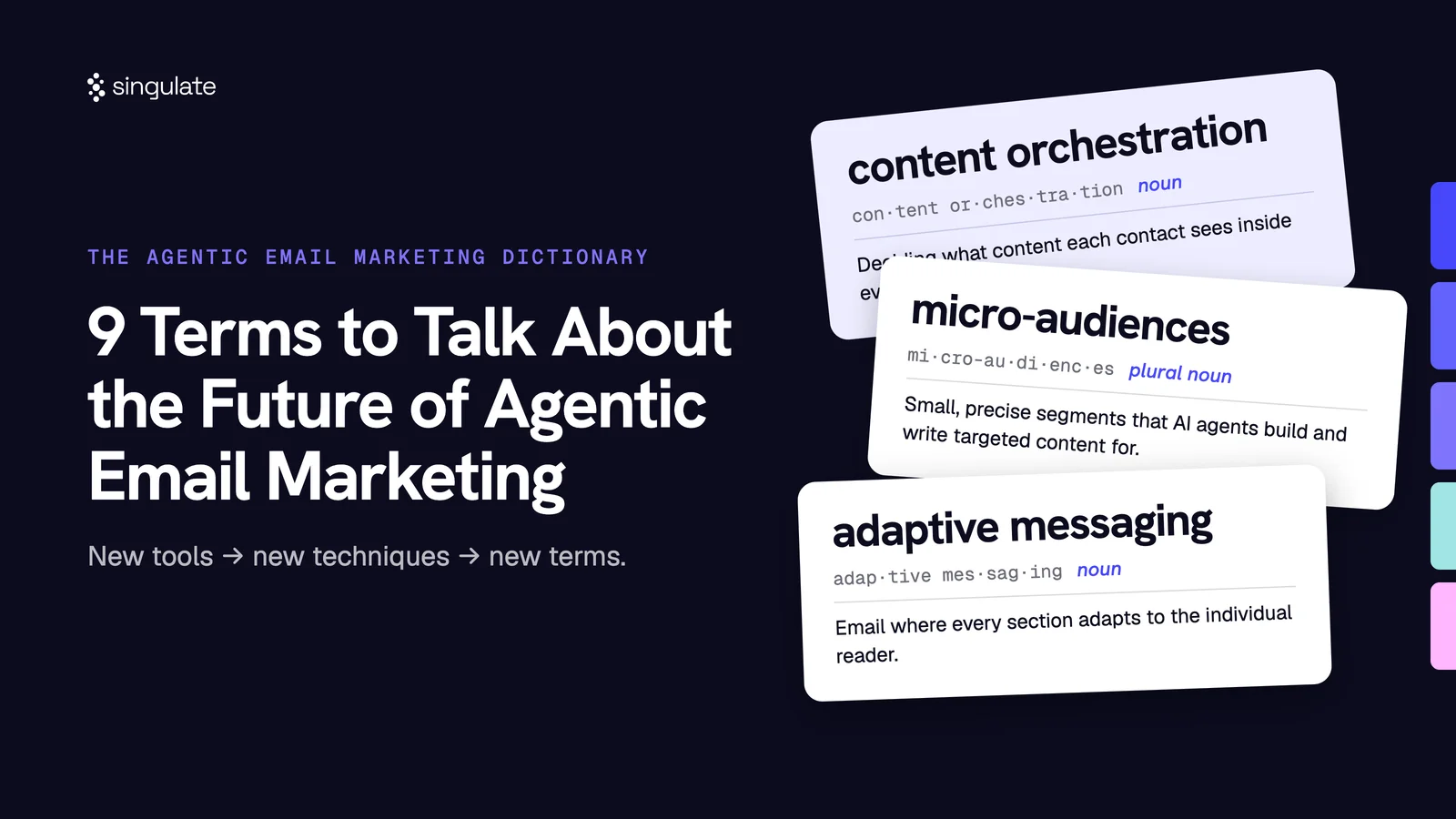
New tools → new techniques → new terms
New tech creates new ways to do things.
It changes the way we live and work.
For example, you probably use one of these every week:
- Uber for hailing rides.
- Instacart for grocery shopping.
- DoorDash for ordering food delivery.
- iRobot for vacuuming floors.
- Facebook Marketplace for local selling.
The list is endless.
New words and terms appear when these changes happen.
You “uber” somewhere.
You “slack” a coworker.
It’s happening in our space, too (marketing technology and AI).
“GTM engineering” is the new term for technical revenue operations, pioneered by new tools like Clay.
“Vibe-coding” is almost the opposite of GTM engineering. It means building software using non-technical language.
In B2B marketing, there are new ways to work in the world of MAPs, CRMs, and AEO.
In this article, you will receive new words and terms to more clearly explain the work you’re doing, specifically in email marketing and marketing automation.
You choose if you want to use them.
You will at least sound really, really on top of it to your boss and coworkers.
Either way, it’s a win-win. Let’s go!
1. Content orchestration
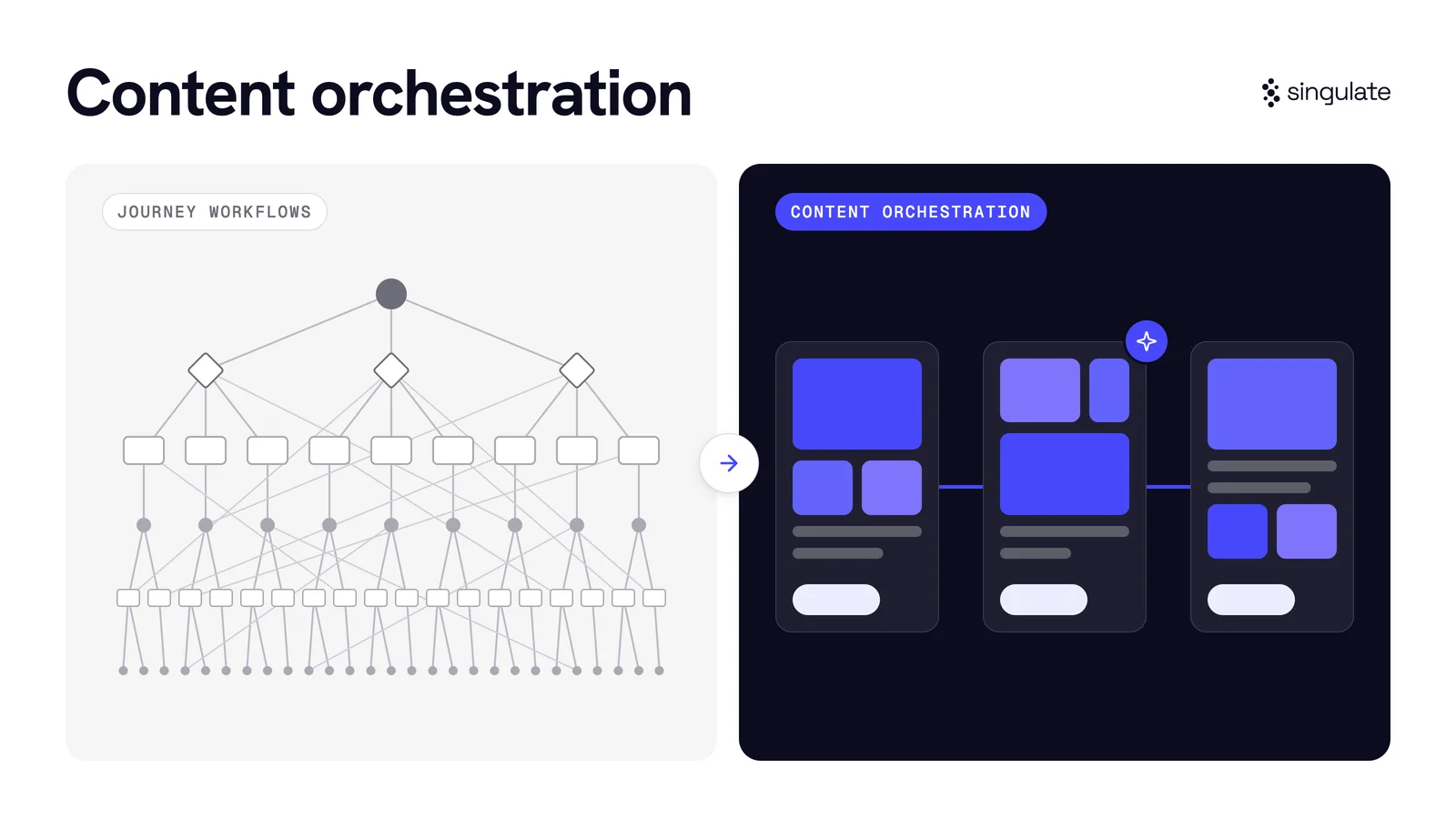
This is the front-of-house version of “journey orchestration”, the common term in marketing operations for the path that a contact moves through in its lifecycle with a company. While journey orchestration is decisioning the set and cadence of emails and actions for each segment, content orchestration is the inter-email decisioning of what content that contact should receive. It’s the coordination of what messaging an end-user sees in their content, such as the hero, the case studies, or the calls to action. Journey orchestration alone leads to limited segmentation and generic emails, due to the amount of manual work it takes to create these workflows. However, with content orchestration, each touchpoint becomes much more segmented and personalized because the content inside those emails is much more relevant.
2. Adaptive messaging
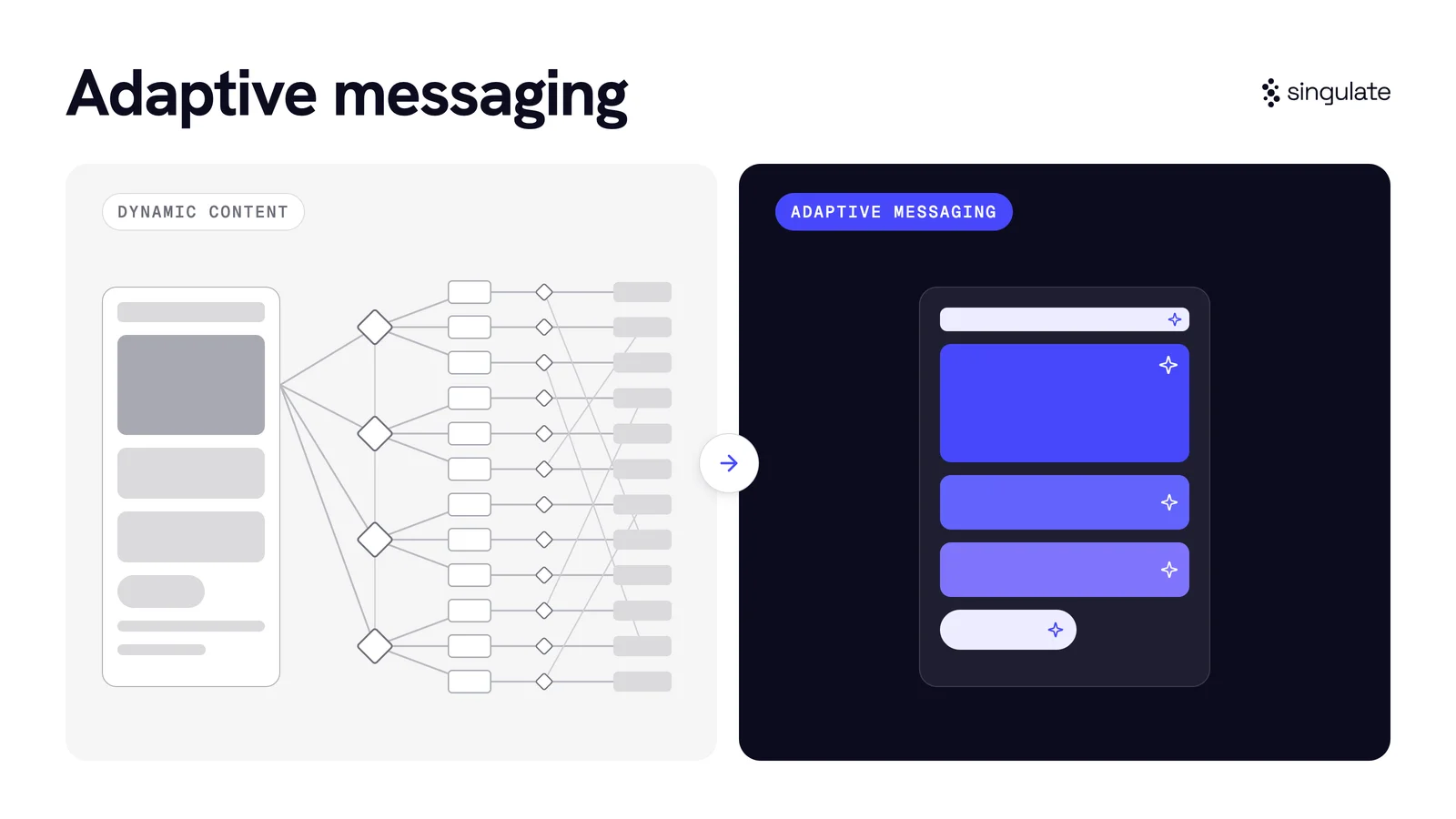
As opposed to segmented messaging, generic messaging or “email blasts” where everyone receives the same email, adaptive messaging is a term that means the content of each email adapts dynamically to each individual. It’s different from “dynamic content”, which still uses manual segmentation and content blocks and is typically used for one section of the email. Adaptive messaging uses more powerful artificial intelligence strategies to change (i.e., orchestrate) multiple (i.e., every) sections of the email, whether that’s a generated snippet, skip logic, dynamic content, token transformation, or another technique to make that email unique and relevant to each individual.
3. Micro-audiences
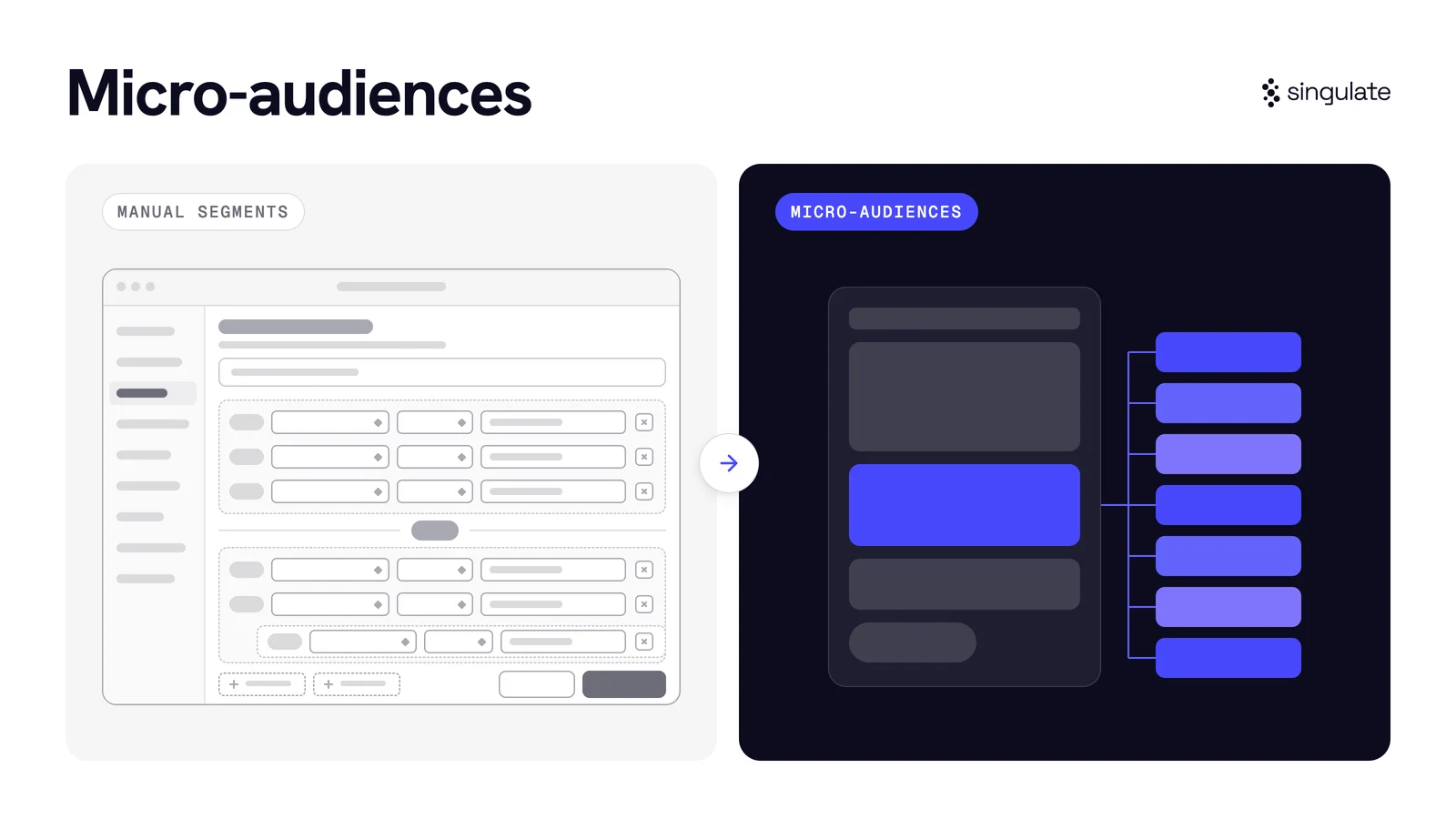
The ability for agents to create smaller audience segments and generate targeted content for them, in the same way a marketer would for larger segments. Targeting granularity is increasing thanks to the ability to use autonomous agents to customize messaging for more and more audiences.
4. Fine-tuning
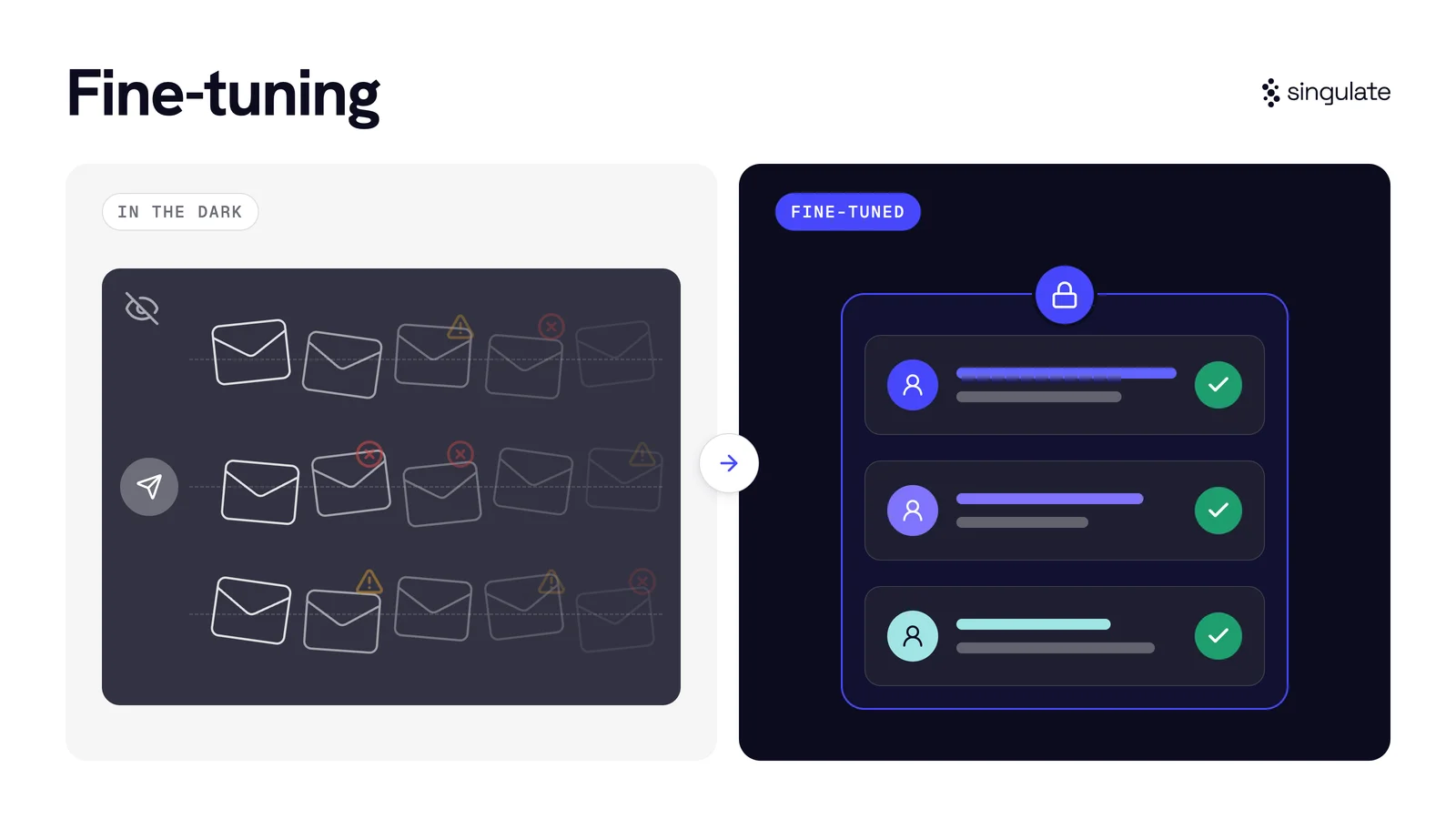
The QA process of going through LLM outputs and marking them good or bad to train the model, set up guardrails, and ultimately de-risk variance at scale. It’s feeding the model examples of what “good” looks like. It also involves strengthening the prompt to be more robust when poor or low-quality outputs are generated.
5. Modular architecture
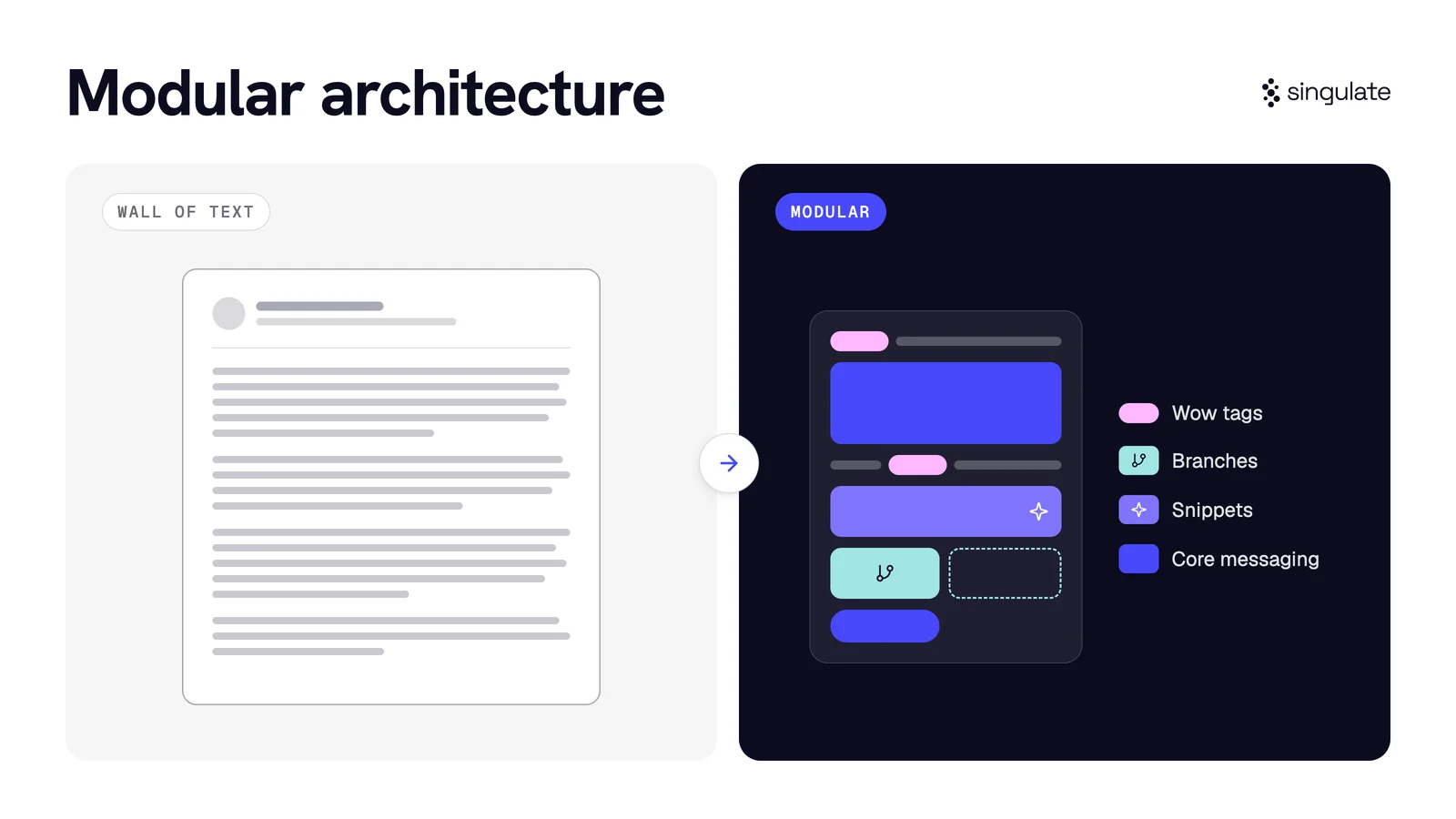
The approach to marketing communication and personalized content creation where you separate the asset (e.g., email, landing page) into modules and use one agent or strategy per module, instead of one agent and strategy to generate the full asset. It solves the problem of the “giant prompt.” A giant prompt governs too much, leading to more surface area for an LLM to hallucinate or generate inconsistencies at scale, due to the non-deterministic nature of how LLMs work.
6. Compound personalization
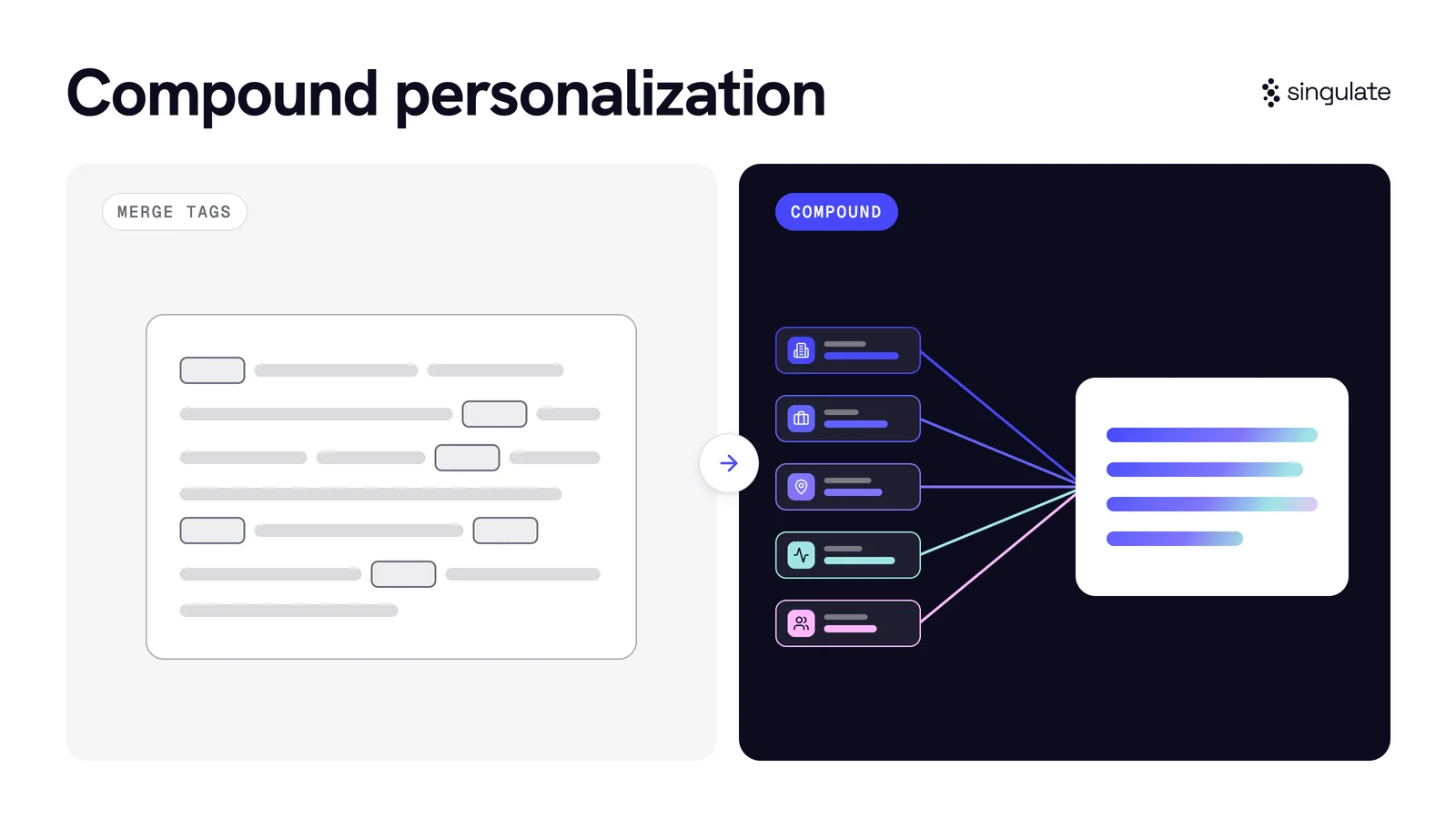
Any personalized messaging that strings together multiple data attributes of the contact and account. Instead of a static token dropped into a statement, the full statement weaves together data points to create a well-written, naturally structured message that is uniquely relevant to the contact.
7. Combinatorial explosion
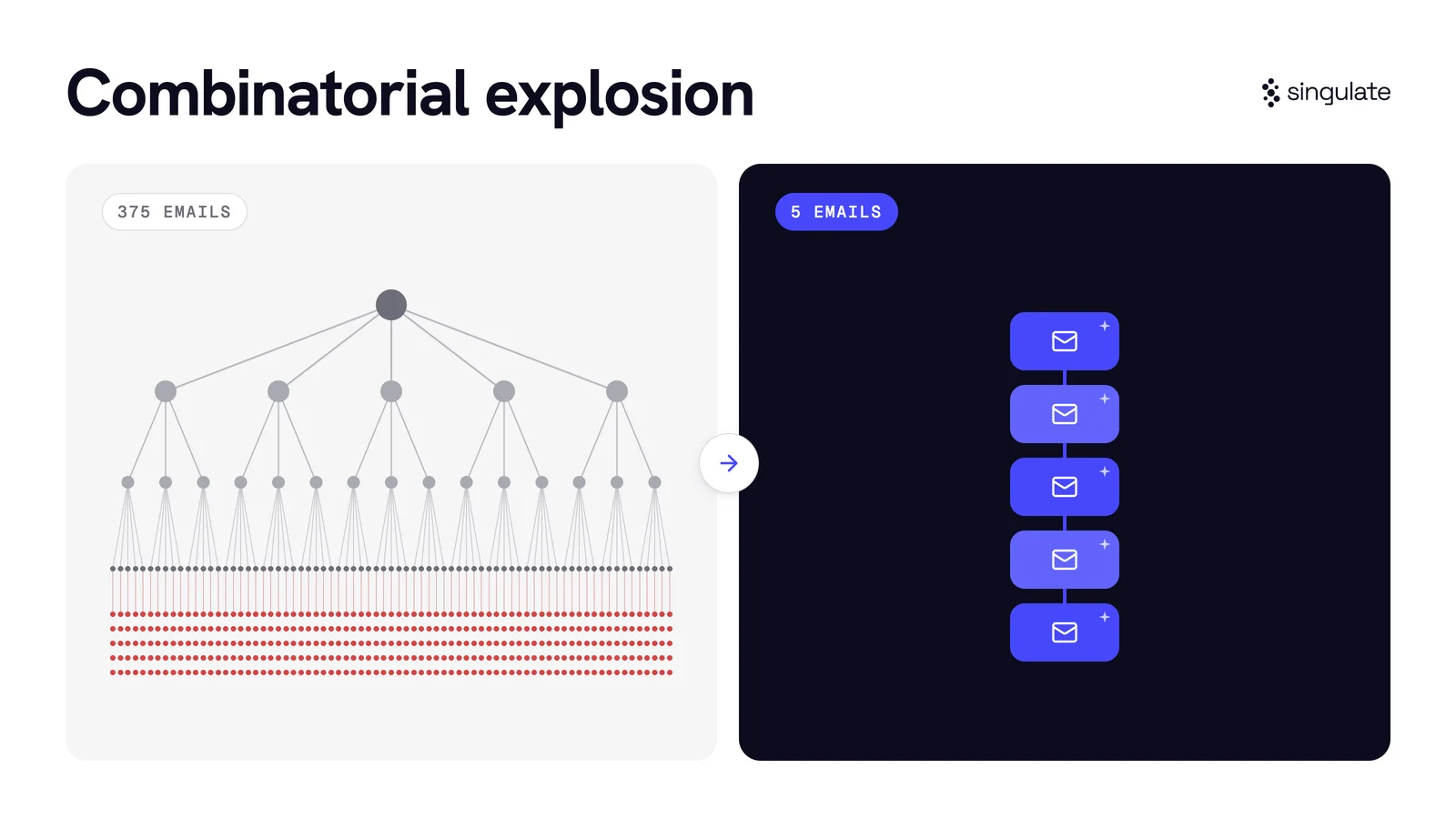
A.k.a. the “Infinity Tree Problem” of manual segmentation. Sometimes called the workflow “Octopus”, this is the problem that happens when you take the traditional segmentation approach of journey orchestration, where you create a “path” for each segment to go into. The problem is what happens when you have 5 industries, 3 seniorities, 5 geos, and a 5-email nurture. That’s 375 emails! And that’s not even using a fraction of the signal data that you have in your database.
8. Static personalization vs. over-personalization vs. invisible personalization
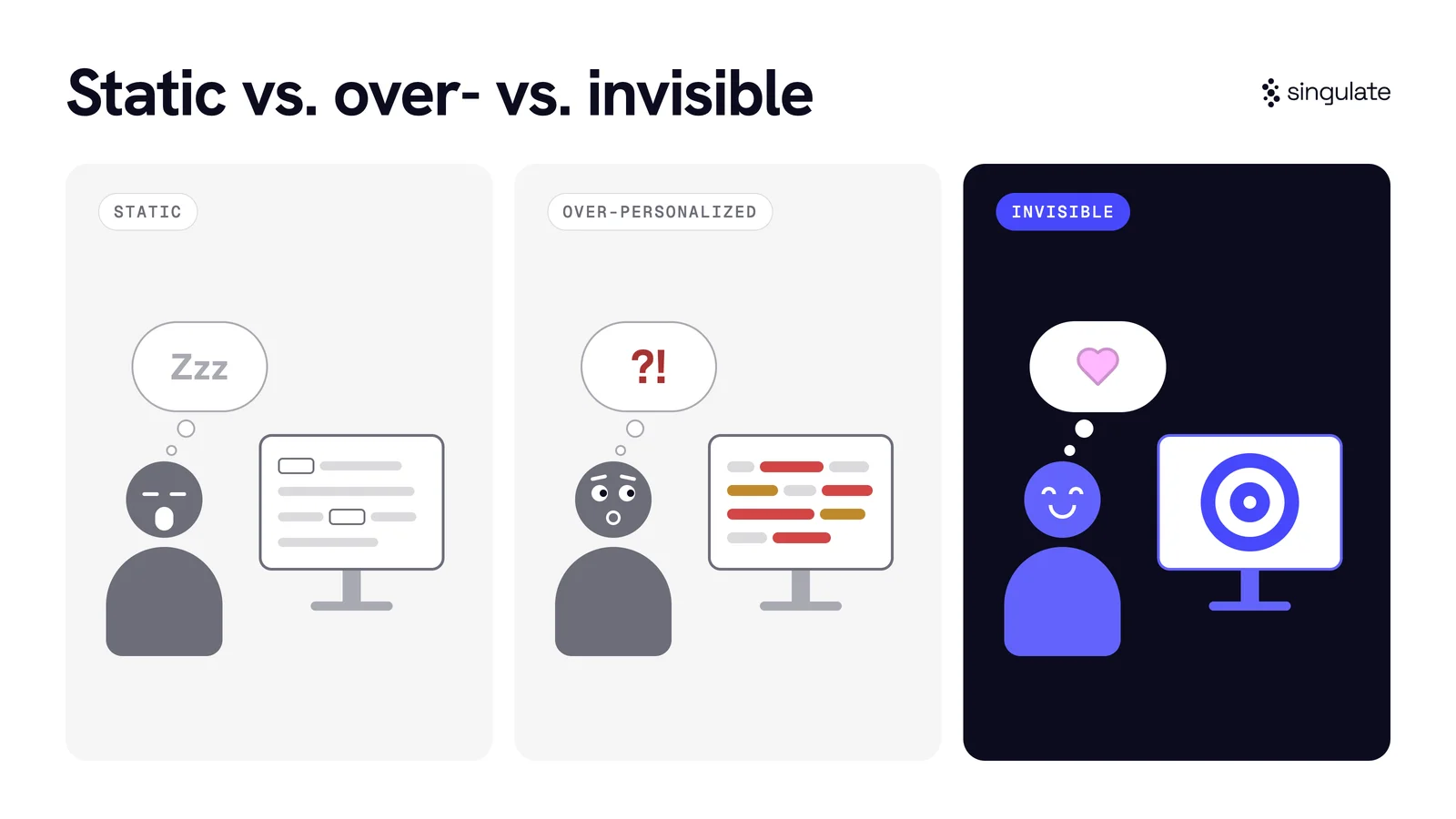
Static personalization has been the industry norm for decades. It’s the equivalent of merge tags: tokens sprinkled into copy. Over-personalization is when AI writes something that is a little too on-the-nose, too personal, borderline creepy, or just sounds like tasteless, automated AI-generated messaging. Invisible personalization is personalization that is so good it doesn’t feel personalized at all. It’s just a good, helpful, and relevant message. It’s unique and resonates at scale without raising an issue. For example, your Amazon app. It’s personalized to show you products you want or need. It’s not annoying. It’s helpful, thoughtful, and easy. That’s good personalization. That’s what moves the needle.
9. Messaging architect
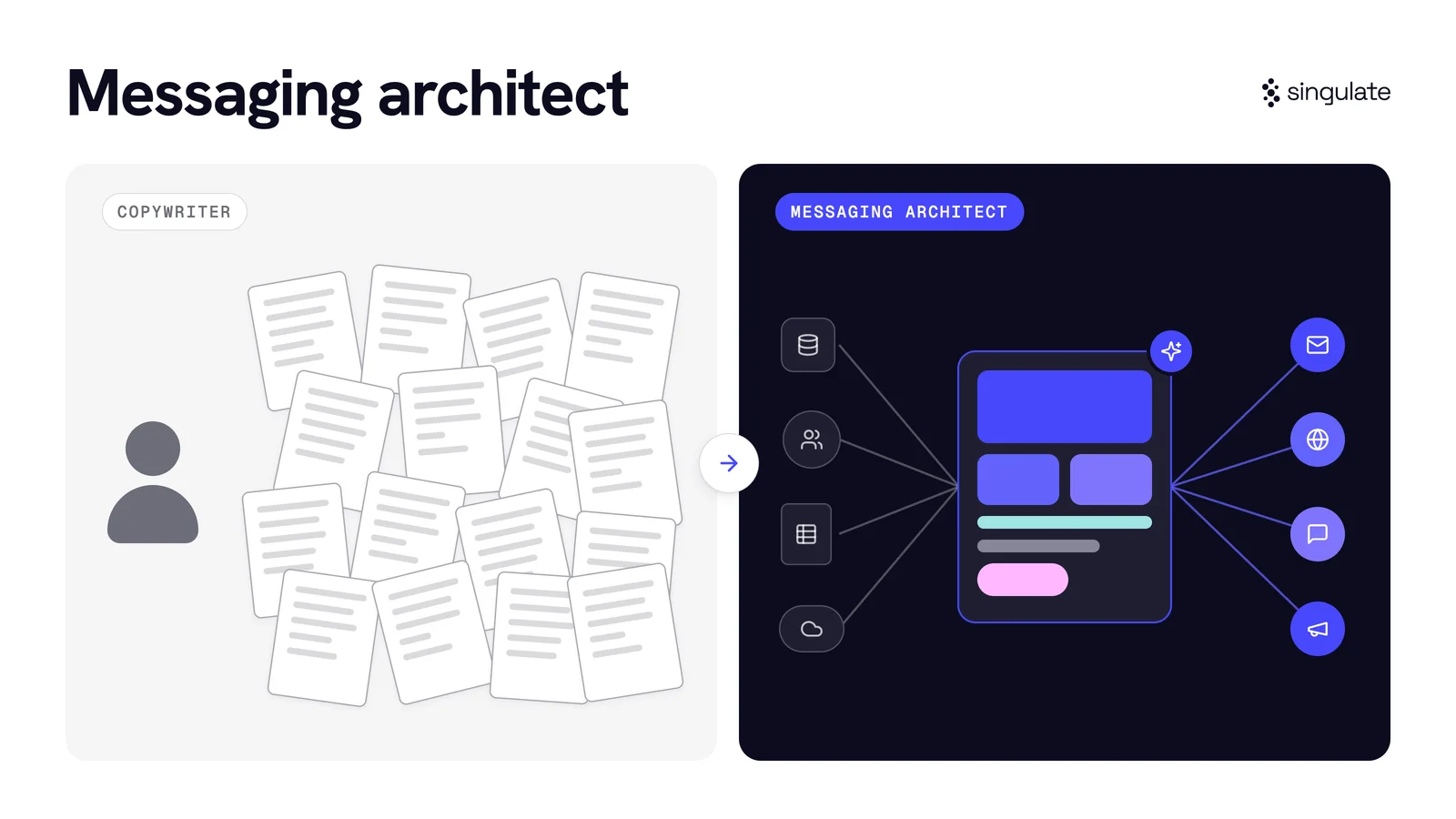
A.k.a. a copy engineer. An AI- and data-fluent copywriter who understands how to work with agents to create 1:1 personalized messaging strategies at scale. They don’t just write good copy, they write good prompts that produce good personalized copy at scale.
Bonus: Singulated
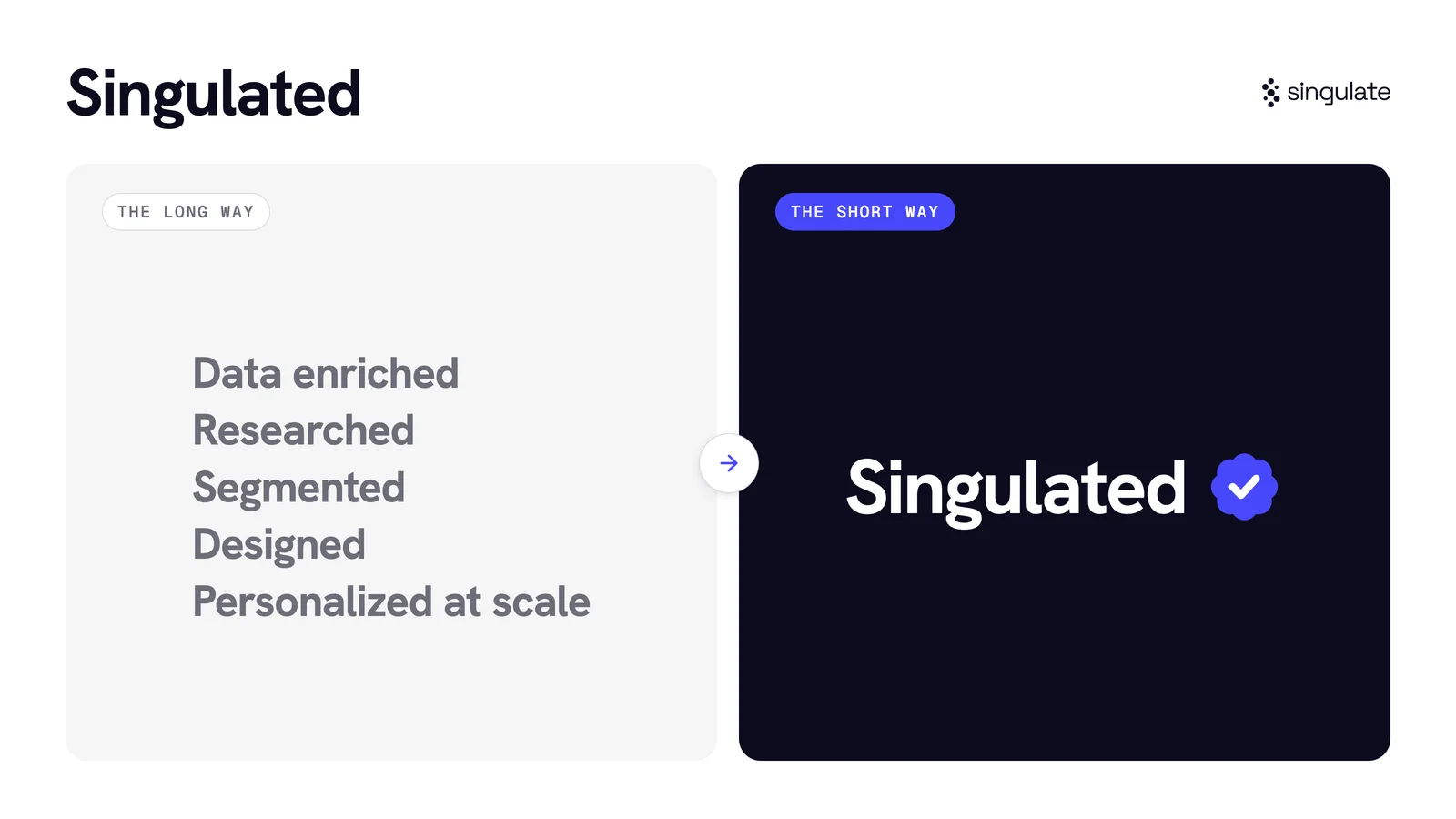
The verb “singulate” means to “break off or isolate away from others.” So in marketing, it means “segmented and personalized at scale”, but in 3 syllables instead of 10.